Our Shows
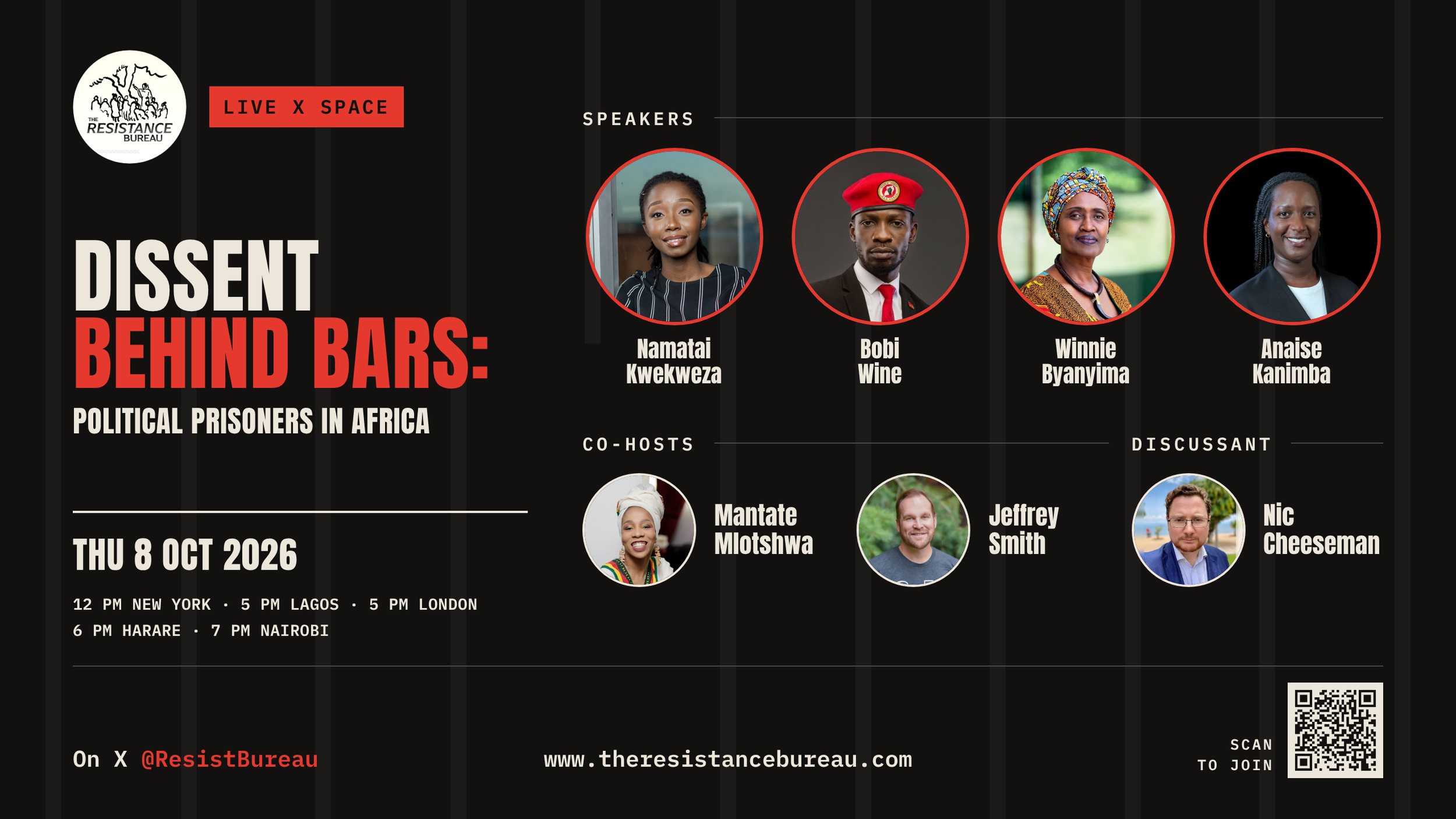
Dissent Behind Bars: Political Prisoners in Africa
Across Africa, governments are increasingly treating political opponents as criminals. Opposition leaders, activists, journalists and human-rights defenders are increasingly being detained for challenging those in power. No reliable continent-wide count exists, but the total runs into the tens of thousands. Uganda’s Kizza Besigye and Tanzania’s Tundu Lissu are among the most prominent examples: both face treason charges after decades of pursuing nonviolent change through the ballot box, the courts and civic mobilization. What does imprisonment do to individuals, families and opposition movements? Why are governments turning to criminal law to muzzle dissent? And what can activists and international partners do to secure their release and defend political space?
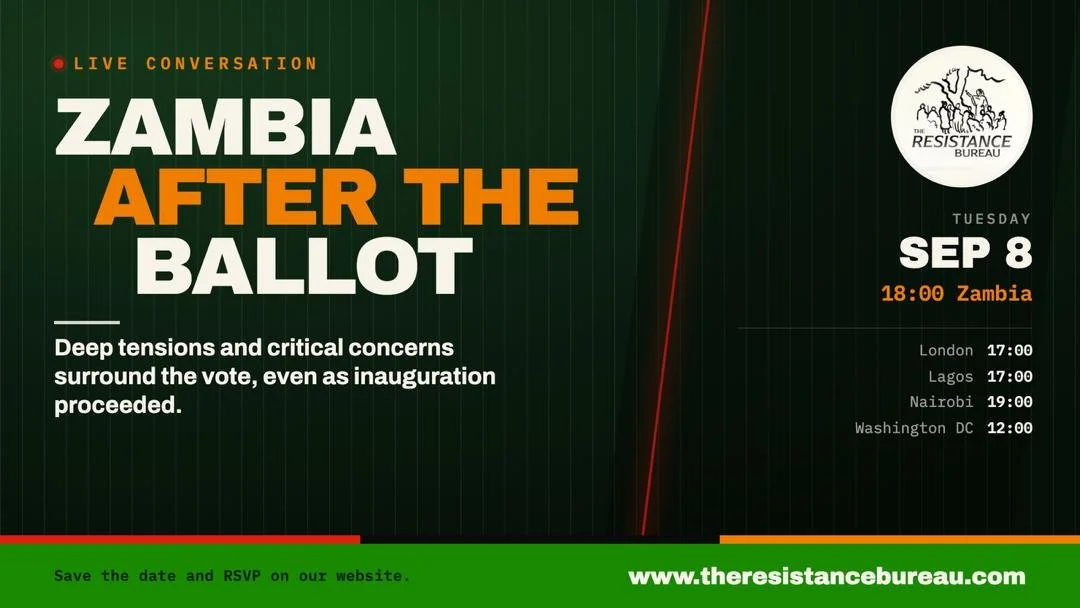
Zambia After the Ballot
Zambia’s 13 August 2026 elections have left the country facing serious questions about the integrity of its democratic process. President Hakainde Hichilema was re-elected with a comfortable official majority, but the election was marred by procedural failures, restrictions on opposition activity and compelling evidence of vote inflation. Because presidential results were also used to allocate proportional-representation seats, this appears to have changed the distribution of seats in parliament.
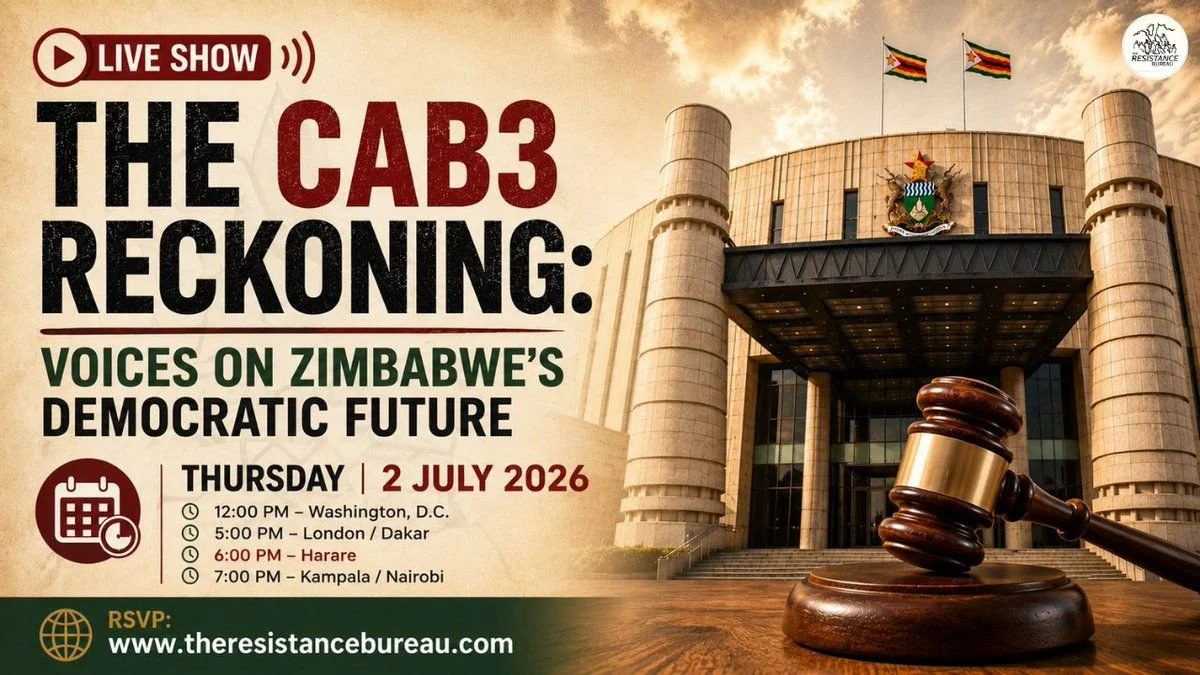
The CAB3 Reckoning: Voices on Zimbabwe’s Democratic Future
Zimbabwe is on the brink of a major constitutional turning point. Constitutional Amendment Bill No. 3 (CAB3) has cleared the National Assembly and is now moving through the Senate, threatening to rewrite the rules of power in the country: ending the direct presidential vote, extending executive terms, and tightening state control over elections.
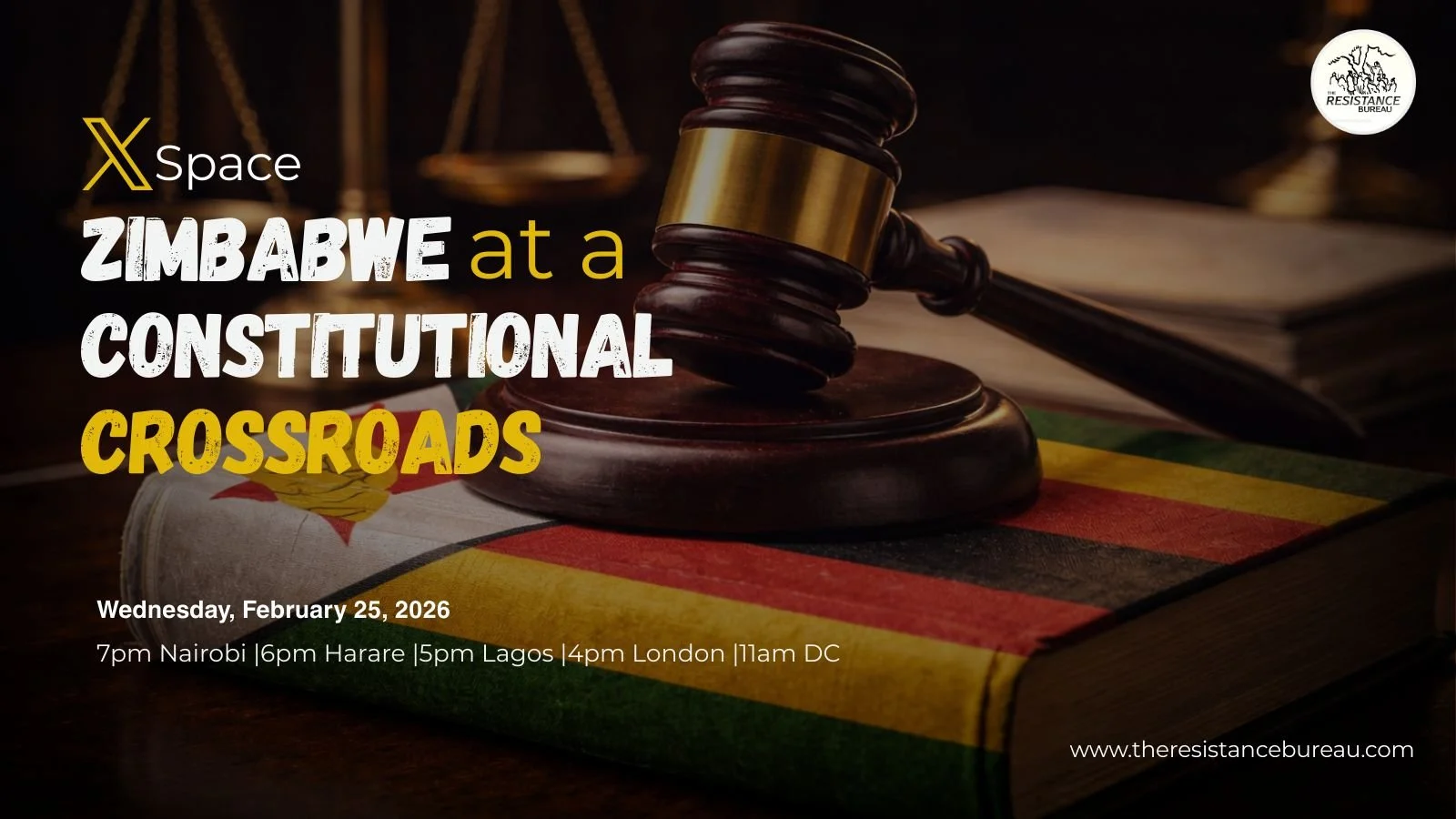
Zimbabwe at a Constitutional Crossroads
Zimbabwe is entering a pivotal moment as sweeping constitutional amendments threaten to entrench executive power and undermine democratic safeguards. Join us for a timely and inclusive conversation about protecting Zimbabwe’s democratic future and holding power to account in a country where the stakes have never been higher.
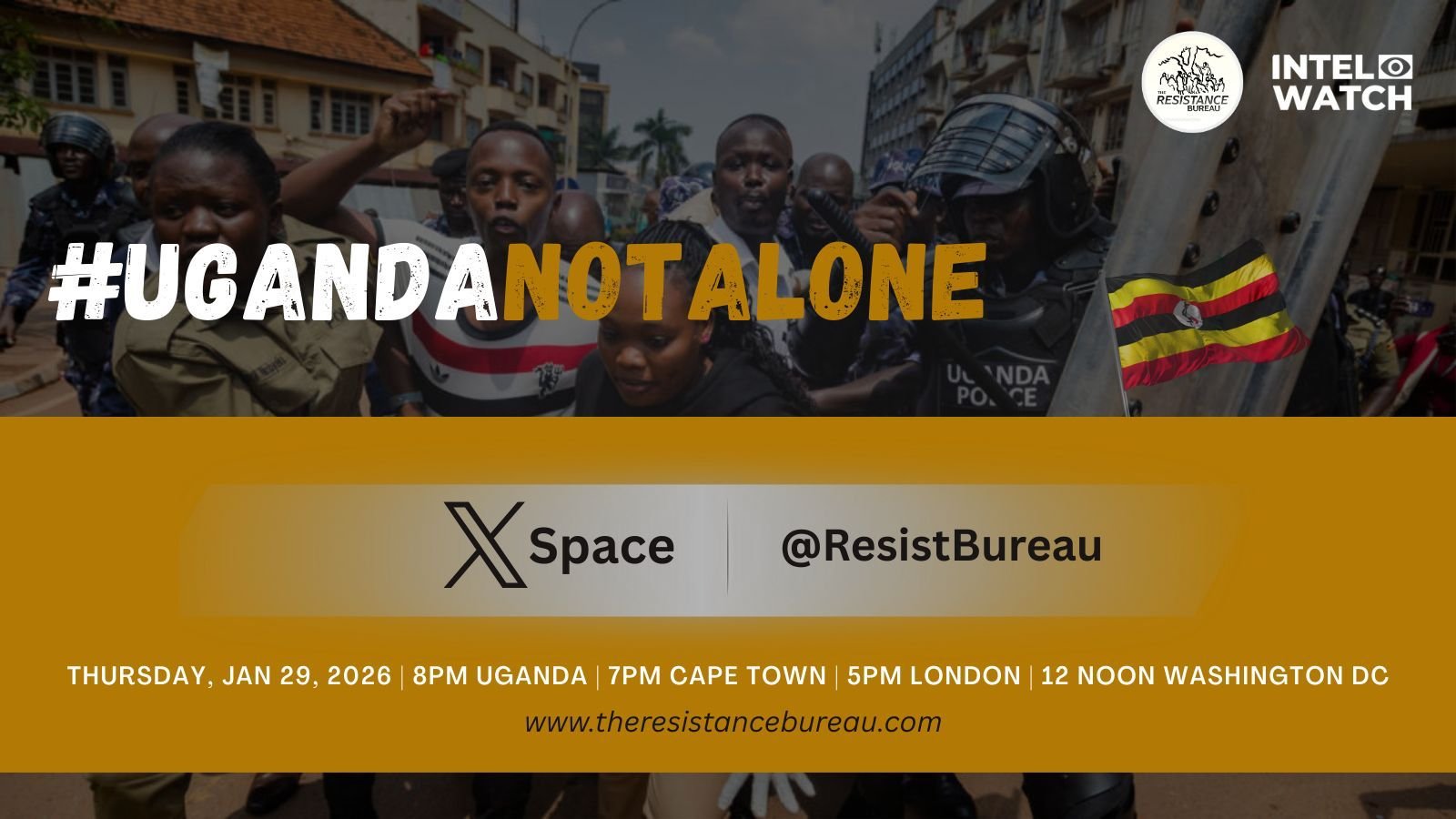
Twitter Space: #UgandaNotAlone
Uganda stands at a critical juncture. In the aftermath of a rigged and violent election – where the will of the Ugandan people was disregarded – the Ugandan government has intensified a crackdown on the political opposition and civil society organizations. In light of this reality, The Resistance Bureau in partnership with IntelWatch, invite you to join the #UgandaNotAlone Twitter Space in order to show public solidarity with those on the front lines in Uganda.
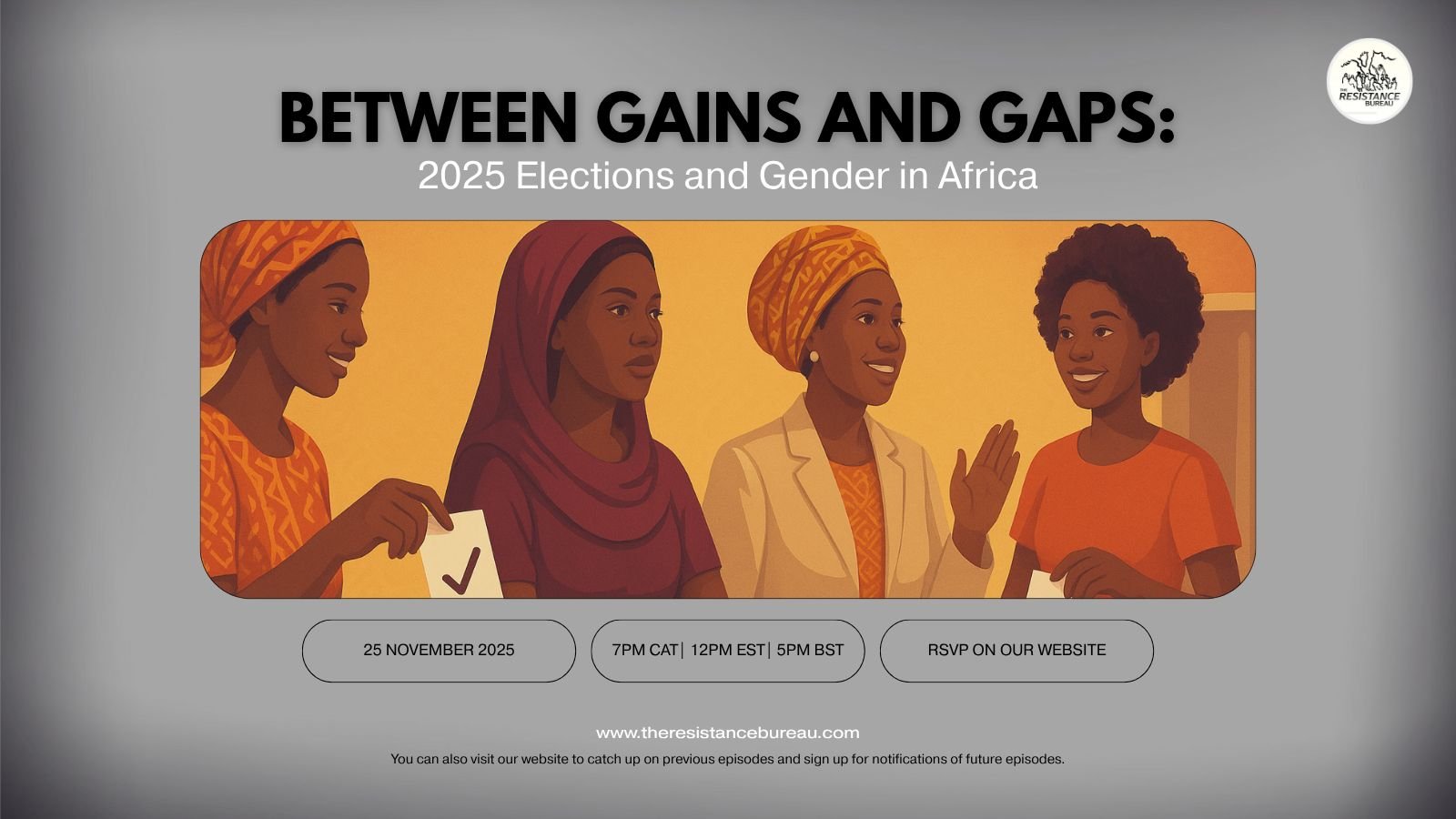
Between Gains and Gaps: 2025 Elections and Gender in Africa
Against the backdrop of the International Day for the Elimination of Violence Against Women (November 25), this program spotlights Africa’s 2025 elections as a pivotal moment for gender, politics, and power on the global stage.
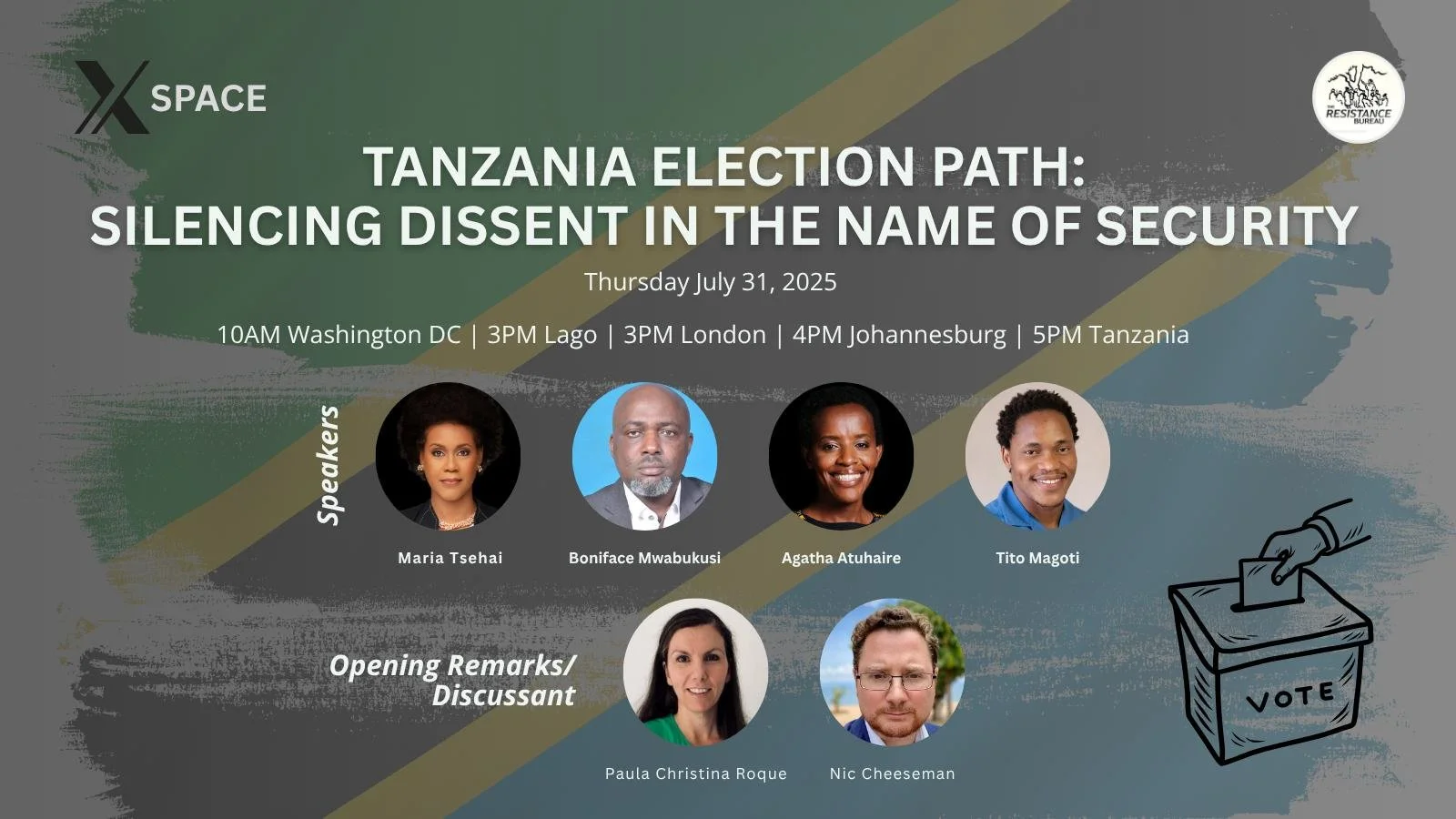

Africa After Aid? The Impact and Possibilities
The attack on foreign aid and development assistance from U.S. President Donald Trump has devastated the global system that encompasses work related to democracy, human rights, health, and development. Join us to discuss the fallout for Africa.

Twitter Space: A New Era of Youth Liberation?
There is a deepening realization that a shift has taken place in the political dynamics of Southern Africa – and perhaps more broadly, across the continent. In recent elections, from South Africa to Senegal, the youth have risen up to make their voices heard at the ballot box, but also in the streets. Will this trend continue into 2025? And how can youth leaders build platforms to both capitalize on and sustain this momentum?

Do Opposition Parties Deliver in Office?
This show will bring together leading researchers, civil society figures, and journalists to take stock of the latest developments in these countries -- and more -- while asking some difficult questions. Does power corrupt? Or is it structural challenges – such as inherited debt, overzealous police, and pliant courts – that create the conditions that undermine the best intentions of new leaders? Join us!

Twitter Space: Tanzania: Why are so many opposition figures in jail?
This show takes stock of recent developments in Tanzania, a country in which there is a noticeably widening gap between outside perceptions and reality on the ground. Since her elevation to power in 2021, President Samia Suluhu Hassan has made lofty promises of reform and pledged to reverse the authoritarian tide that accelerated during the tenure of her predecessor, John Magufuli, widely known as ‘The Bulldozer.’
Early on, the media – both domestic and international – was riveted by Tanzania’s first woman president and positive coverage became the norm. To be fair, President Hassan did reverse some of the more draconian measures enacted by her predecessors. She also reached out to and met publicly with outspoken critics, including the country’s most well-known opposition leader, Tundu Lissu, following his return from exile.
Tanzania is now gearing up for local elections in December and a general election next year. In this increasingly charged political environment, the authorities have reverted to the repressive tactics of past regimes. Just last month, over 500 opposition political activists were arrested and jailed on trumped-up charges, including Tundu Lissu. Journalists and independent media practitioners are also being targeted with arrest, harassment and violent intimidation.
Despite the lingering perceptions of Tanzania being on the pathway to reform, there is a serious prospect of a major crackdown as the 2025 polls near. Already, power is being centralized with the country’s security and policing apparatus now falling under command of the office of the president. There is a serious risk that Tanzania will slowly but surely evolve into a police state. If this happens, the prospects for free and fair elections, or reducing the corruption that the ruling party has become well known for, will be slim.
On 12 September – at 6PM Tanzania time (11AM ET) – our team will delve into these timely issues with some of Tanzania’s most prominent defenders of democracy and intellectual heavyweights. Join us!

Twitter Space: Zimbabwe's Human Rights Crisis and the SADC Summit
On 17 August, the 44th SADC Summit of Heads of State and Government will take place in Zimbabwe under the theme: “Promoting innovation to unlock opportunities for sustained economic growth and development.” The lofty framing of this high-level gathering is at complete odds with recent developments in the host nation. This includes the arrests on June 16 – and the alleged torture and beatings by police sustained thereafter – of several prominent human rights defenders who were forcefully removed from their plane before traveling to a civil society conference. In total, 18 activists were unjustly detained by Zimbabwean authorities, according to local lawyers. Among those detained is a former speaker on The Resistance Bureau, Namatai Kwekweza, a 25-year-old pro-democracy campaigner and the inaugural winner of the 2023 Kofi Annan NextGen Democracy Prize.

Twitter Space: Kenya's Gen-Z protests: The Beginnings of an African Youth-Quake?
Kenya’s wave of youth-led protests against the 2024 Finance Bill has sent shockwaves through the country’s political establishment -- and the rest of the continent. The extent of the protests has already forced President William Ruto to 'withdraw' the bill and the crippling tax increases that it contained. More recently, Ruto also pledged to introduce a range of measures to reduce the cost of government and to engage with the International Monetary Fund and other international partners to find an alternative way to respond to the country’s debt crisis.

#SAElections24: Election Eve Special
South Africa’s 2024 general elections, on May 29, are perhaps the country’s most interesting – and hotly contested –since the country's first multiparty, multiracial elections in 1994.

How the Opposition Can Win Unfair Elections: learning from Senegal and other successes
It is sometimes possible to overcome authoritarian forces and produce political change, even when the government is not committed to democracy. This show will explore what strategies and tactics have proved to be the most effective. Together, we will learn how to outmaneuver authoritarian regimes from activists and leaders on the frontlines with a track record of success. Join us!

A 'Perfect Storm of Conflict': Rising Civilian Deaths in Africa
Fatalities from conflicts across Africa have been on the rise since 2020, but 2023 saw an escalation of violence that pushed civilian deaths to the highest levels since 1999. Today, certain areas of the Horn of Africa, the Sahel, DR Congo, Nigeria and Sudan are some of the deadliest places for civilians worldwide. And this year is shaping up to be even worse.

X/Twitter Space: What’s Going on with Zimbabwe’s Opposition?
This Twitter Space – happening on Thursday, February 8 at 7PM Zimbabwe time –will bring together well-informed analysts to pierce the fog that currently hovers over the situation. This will be a conversation on accountability and next steps, as opposed to attributing blame and pointing fingers. It will also be a conversation that centers the Zimbabwean citizen and their aspirations. Join us!
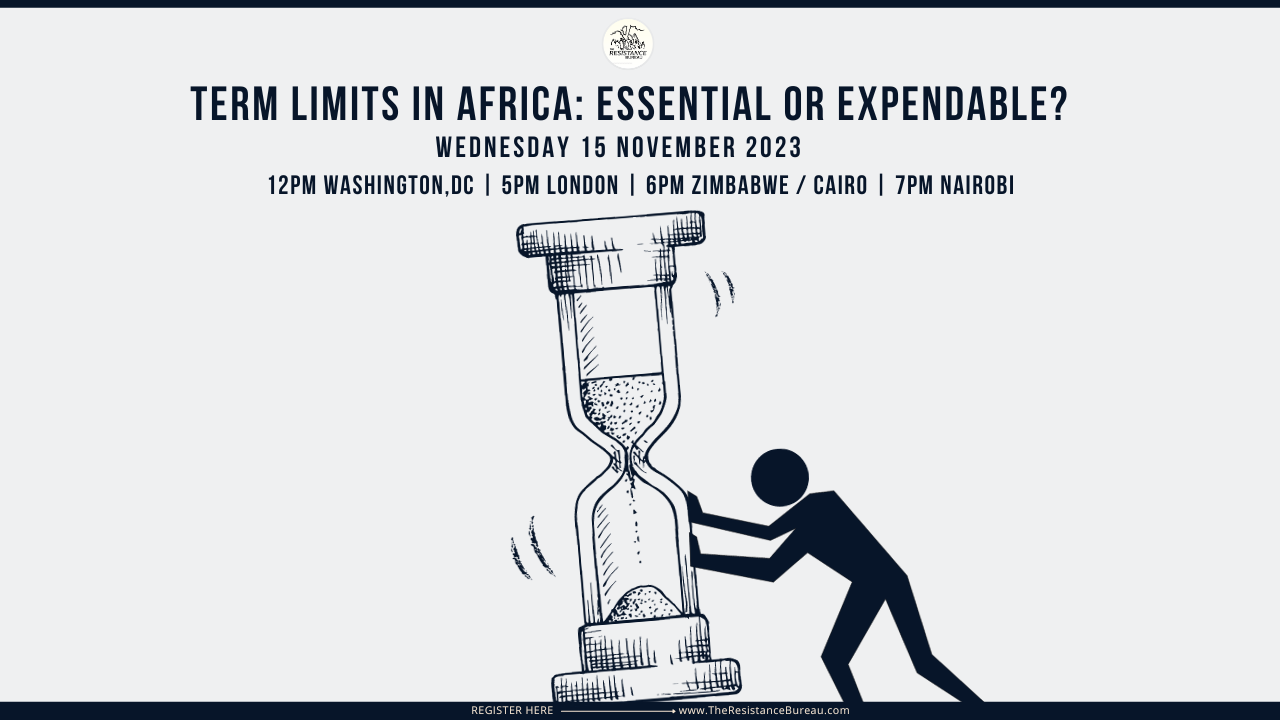
Term Limits in Africa: Essential or Expendable?
In a growing number of countries across Africa, term limits have been removed, and they are actively under threat in many more, including in Benin, Senegal and Sierra Leone.
But while term limit evasions and their removal garner consistent headlines in Africa and beyond do they really matter for governance and development?
For citizens in countries such as Burundi, Cameroon, Chad, Togo, Uganda, and many more the removal of presidential term limits was a pivotal nail in the coffin for democracy. By creating “presidents for life," their removal -- often introduced in the early 1990s to ensure that power could not be consolidated under an individual -- slammed the door on the notion of peacefully changing a government through the ballot box. Instead, established autocrats and newly minted coup leaders have used their ability to remove term limits to assert their political dominance while utilizing repressive strategies to hold and manipulate sham elections.
Nevertheless, while countries where term limits have been respected are on average far more democratic and prosperous than their counterparts, some leaders –- and citizens – seem to believe that they are a hindrance at best, or a 'western imposition' at worse.
Supporters of the Rwandan president Paul Kagame, for example -- who is running for a fifth presidential term in 2024 -- argue that forcing a change of leadership will undermine continuity and encourage short-term thinking at the expense of long-term development. And after all, why should African countries limit how long a leader can stay in office when this is not the norm in the United Kingdom or Germany?
This show will ask whether term limits are expendable or essential for political and economic growth in Africa. In doing so, we'll bring together a brilliant panel of activists, researchers, and journalists who are experts on the issue. We will interrogate how leaders try and successfully remove term limits and whether the lifting of such restrictions leads to more effective governance, or just more oppression and corruption.

X/Twitter Space: #LiberiaDecides Election Day Special
Liberia is often portrayed as a democratic ‘success story’ in Africa. Today, however, many Liberians do not share that positive sentiment. Twenty years of peace was secured in August 2023, and the country is one of only a handful of African states to have experienced two peaceful transfers of power. But that is only half the story. The economy is in tatters and high youth unemployment has led to growing frustration as well as political alienation. Against this backdrop, the lack of political trust in either the ruling party or the National Elections Commission to deliver a credible election is a major concern leading to election day.
Some voters and civil society groups fear a repeat of the Sierra Leonean election – when the electoral commission blatantly inflated the vote for the president in order to avoid a second-round run-off. Others have concerns about acts of political violence, given that these polls will be the first since the departure of the UN Mission in Liberia (UNMIL). Both the opposition and the government have publicly committed to a peaceful process, but this has not been enough to assuage the prevailing concerns of a population with ingrained memories of national trauma of conflict.
Join us for this timely Twitter Space in which we will convene Liberian civil society leaders, election and peace experts, as well as journalists to discuss this consequential election and the steps that need to be taken to safeguard democracy.

Twitter Space: #ZimbabweDecides2023
On 4 August, Tinashe Chitsunge -- a supporter of Zimbabwe’s main opposition party, the Citizens Coalition for Change (CCC) -- was stoned to death. He was traveling to a CCC rally when the group that he was with was ambushed by suspected supporters of ZANU-PF, the country's long-ruling party. The attack represented the culmination of a growing climate of brutality as Zimbabwe heads to the polls on 23 August.
According to Afrobarometer, the proportion of the Zimbabwean population fearing violence during the elections has risen to 58%, up from 43% in 2018.
Along with a raft of highly repressive legislation -- including the Private Voluntary Organizations (PVO) Bill and the Patriotic Bill -- this has led to concerns that this month's elections will be as bad as those held under former autocratic leader Robert Mugabe. In the absence of checks and balances, and with the ZANU-PF government’s low popularity meaning it could still struggle to win -- despite all of its advantages -- there is a real prospect of even more violence around and on election day.
Today, civil society groups are hampered by major restrictions on their activities and the knowledge that an increasingly politicized judiciary will not protect them. International observers are also constrained by late arrivals into the country and the fact that the government has been vetting who is and is not allowed to be part of international missions. For their part, international donors appear to be stuck in a rut, unsure of how to engage with the authoritarian government of Emmerson Mnangagwa, now that he has clearly abandoned an initial commitment to hold “free, fair and credible elections”.
This Twitter Space will convene civil society leaders, activists and leading writers to assess the electoral environment and what can be done -- if anything -- to safeguard the polls. We will also look at lessons from Zimbabwe’s history, and other countries in the region that have managed to resist oppressive electoral environments to hold those in power accountable.